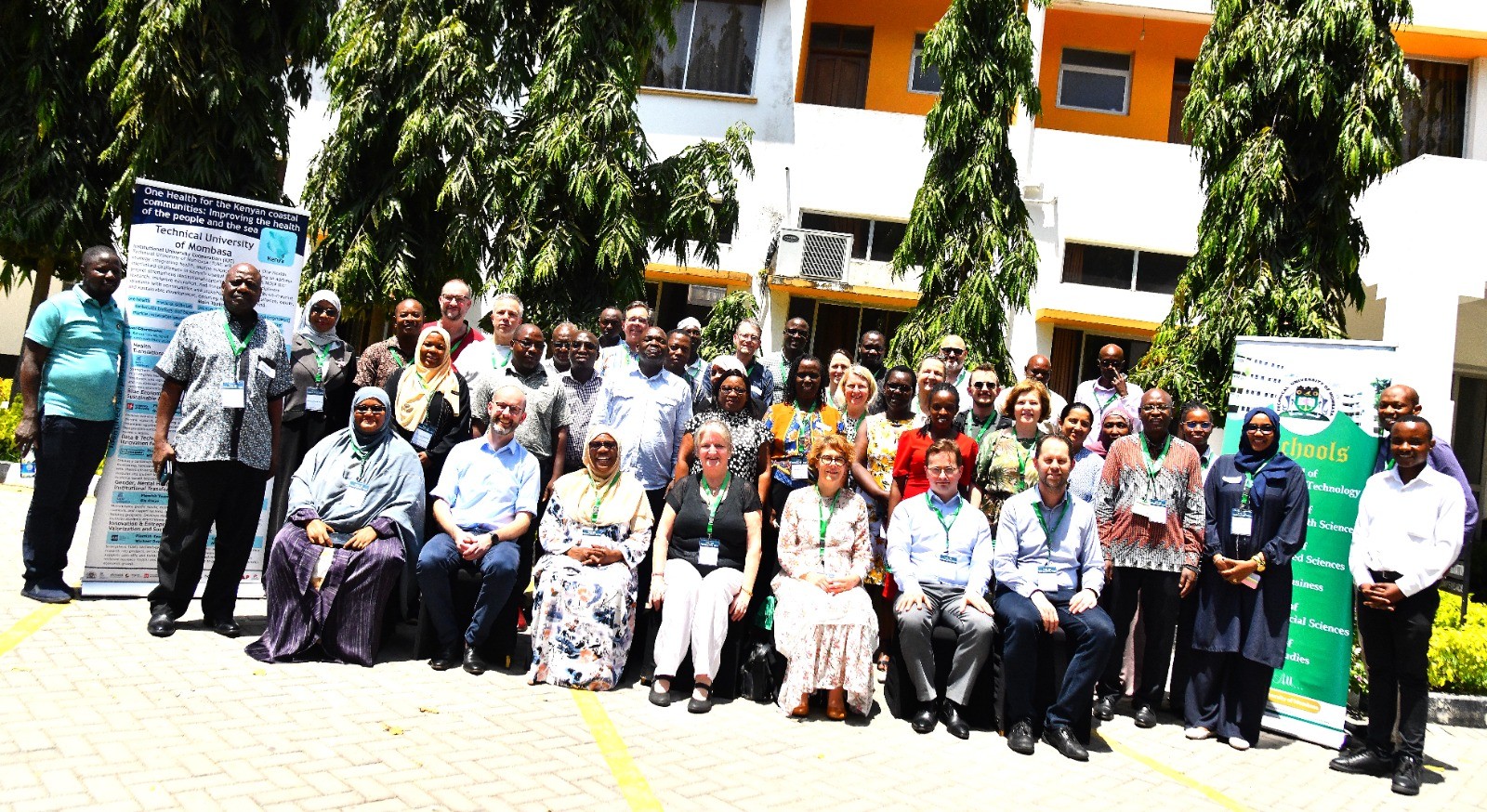
The Technical University of Mombasa (TUM) has begun implementing a long-term Institutional University Cooperation (IUC) project funded by VLIR-OUS (Belgium), making it the only university in Kenya selected for this programme. According to Marc Heijde, the Belgium Coordinator, will run for about 10 years. It is structured around five key thematic areas: Innovation & Entrepreneurship, Health, Blue Economy, Data & Technology (Applied Engineering), and Gender, Mental Health & Inclusion.
Innovation and Entrepreneurship, a core mandate of TUM, sits at the heart of the project. The initiative prioritises translating research into businesses, jobs, and economic growth, particularly in the Coast region. Key outputs include the establishment of a Technology Transfer Office (TTO) and a pre-incubation space to support the development of products, services, and spin-offs in health technologies, marine innovations, and renewable energy. The project promotes student and staff entrepreneurship and strengthens industry linkages to ensure innovations are market-ready and responsive to local needs.
The Health thematic area focuses on advancing translational research and inclusive medical education, while the Blue Economy pillar promotes sustainable marine sciences, aquaculture, and coastal livelihoods. Data & Technology drives innovation through data-driven and engineering solutions, and Gender, Mental Health & Inclusion embeds equity and well-being within education, research, and outreach activities.
The programme spans approximately 12 years, including a preparatory phase. The first five years focus on capacity building through strengthened infrastructure, curricula, staff development, and postgraduate (Master’s and PhD) training. The second phase emphasises impact, turning research outputs into practical solutions, innovations, and direct community benefits.
At the institutional level, the project delivers major infrastructure development. This includes the establishment of a School of Medicine and Health Sciences with a medical skills lab, diagnostics unit, and biobank. Laboratories and research facilities in biotechnology, marine science, and engineering will be upgraded, alongside the creation of a Sustainability and Data Hub supporting sensor-based monitoring, molecular research, renewable energy, and the re-engineering of health and marine equipment. ICT infrastructure will also be strengthened to support digital transformation and knowledge management.
Scholarships and capacity building form a critical component of the project. Scholarships support PhD and Master’s training in priority fields such as medical sciences, bioinformatics, marine ecology, and biomedical engineering. Research quality and postgraduate supervision are strengthened through the Graduate School, while staff development programmes aim to increase the proportion of PhD-qualified faculty.
In governance and internationalisation, the project strengthens TUM’s existing Partnerships, Research and Innovation Office, enhancing coordination of donor engagement, international collaboration, and research fundraising. International cooperation is reinforced through partnerships with Flemish universities, including Ghent University, Vrije Universiteit Brussel (VUB), and Hasselt University (UHasselt), alongside other global partners.
At the societal level, the project delivers tangible benefits to communities. Improved access to diagnostics and translational research addresses infectious diseases, antimicrobial resistance, and reproductive health cancers, while health professionals are trained using community-oriented and gender-sensitive curricula. Capacity in fisheries, aquaculture, and marine ecosystem management is strengthened, supporting climate resilience and food security in coastal communities.
Gender equity and mental health support are embedded in education and outreach, alongside targeted programmes for youth employability and women’s empowerment.
This IUC project is a transformative investment in TUM’s future. Its scale, duration, and innovation-driven focus position the university to move beyond teaching into sustained research leadership, enterprise creation, and real-world problem solving, strengthening its role as a catalyst for inclusive development in Kenya and the wider region.