TUM joins IEEE DTMES 2026 to advance electronics and industry collaboration
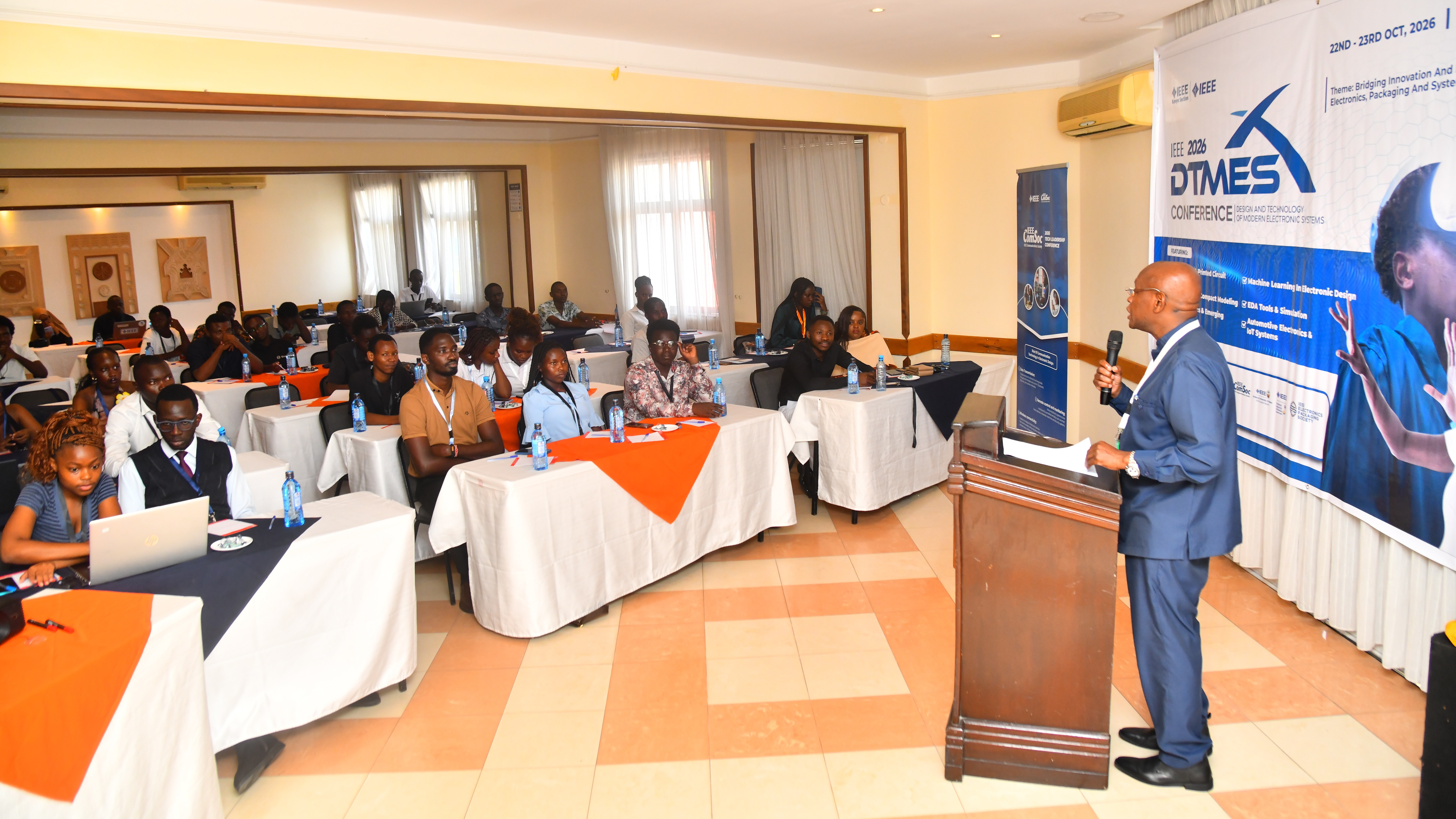
The Technical University of Mombasa (TUM) is participating in the 2026 IEEE Conference on the Design and Technology of Modern Electronics Systems (DTMES), a two-day gathering bringing together researchers, academics, industry professionals and students to explore emerging technologies and opportunities for collaboration.
Held on October 22 and 23 at the Royal Court Hotel in Mombasa, DTMES 2026 is themed “Bridging Innovation and Industry: Electronics, Packaging and Systems for Africa’s Digital Future.” TUM is among the institutions collaborating with the IEEE Technical University of Kenya and IEEE Kenya Section in the conference.
Representing the Vice Chancellor, Prof. Laila Abubakar, at the opening ceremony today, TUM Deputy Vice-Chancellor, Academics, Research and Extension, Prof. Peter Gichangi, emphasised the importance of stronger links between universities, research institutions and industry in translating research into practical solutions.
He noted that Africa’s technological potential can be better realised when innovations developed through research are adapted into reliable and affordable solutions that respond to local needs, strengthen industries and create opportunities.
Prof. Gichangi further highlighted the role of electronics packaging and systems engineering in moving innovations from laboratories into real-world applications, describing the gathering as an opportunity to exchange knowledge, nurture talent and strengthen the relationship between research and industry.
The University’s participation also includes the Dean, School of Engineering and Technology, Prof. Michael Juma Saulo, and the Director, TUM TVET Institute, Dr. Michael Odhiambo, who are contributing to the programme through technical and professional sessions.
The programme features keynote presentations, technical workshops, industry sessions, panel discussions, exhibitions, project competitions and poster presentations. Areas of focus include power systems, electronics packaging, robotics and automation, embedded systems, IoT, e-mobility, artificial intelligence and machine learning in electronic design.
A central focus of the discussions is how universities can better prepare graduates for industry while creating pathways for research and ideas to move into practical applications. Sessions include discussions on aligning curricula with market needs, technology development, hardware start-ups and careers in semiconductor, electronics and embedded systems.
Addressing participants, Prof. Gichangi encouraged researchers and students to engage across disciplines, connect with industry and use the platform to identify challenges facing African industries that can be addressed through research and technological expertise. He also called for greater investment in homegrown technologies that can be designed, adapted and commercialised to respond to Africa’s needs.
For TUM students and researchers, the gathering provides an opportunity to interact with professionals and fellow researchers, exchange ideas and explore potential collaborations, mentorship and innovation pathways.
The second day will feature sessions on AI and machine learning in electronic design, electronics design automation, automotive electronics, IoT and edge systems, technology ventures, and women’s careers and leadership in the electronics sector. The programme will conclude with project and poster awards and the closing ceremony.