20 Nov 2026 LUBNAH ABDULHALIM
TUM Maritime Institute advances policy into practice at 9th AAMA annual conference
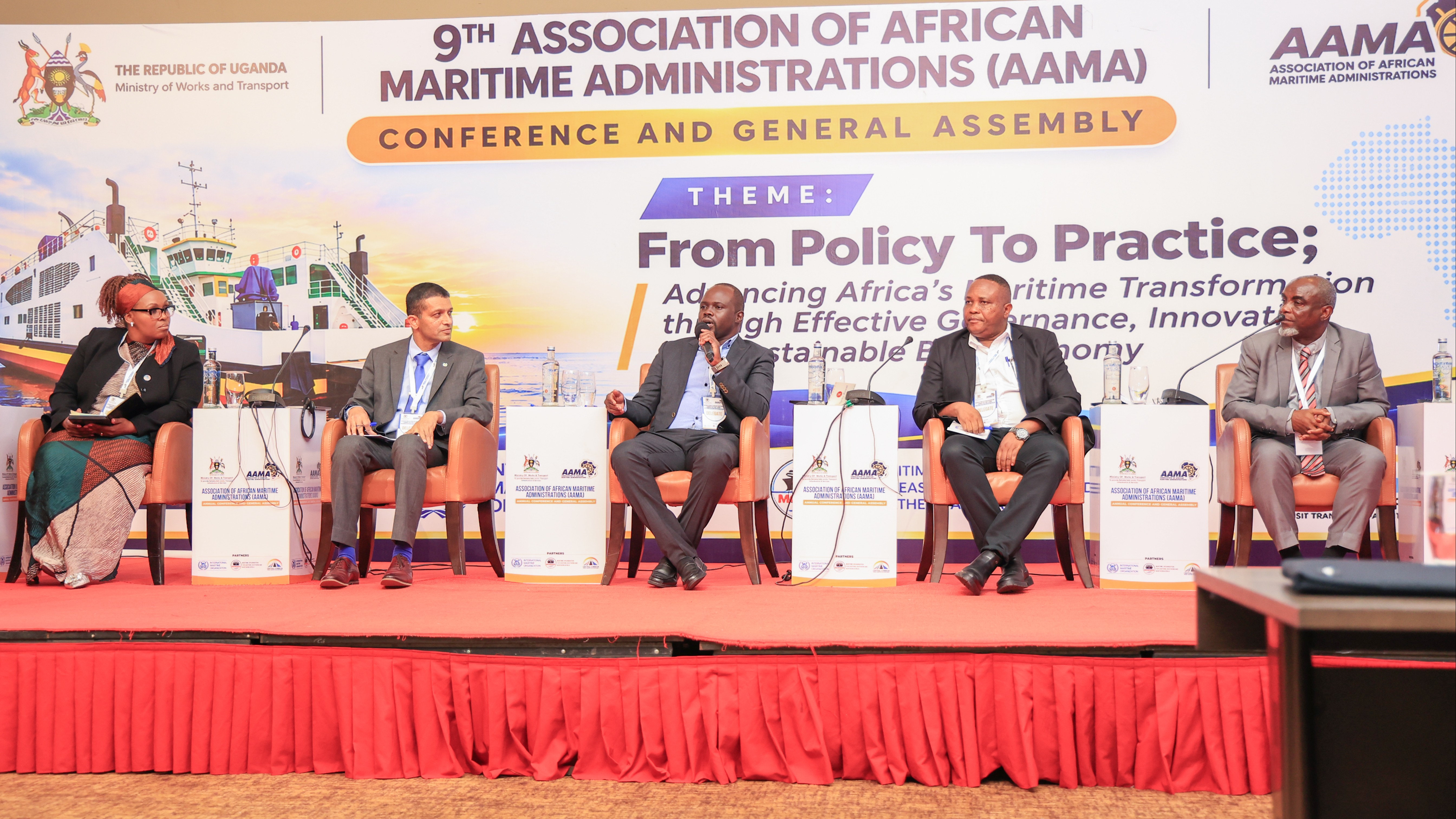
The Director of the Institute of Maritime and Seafaring Studies, Capt. Talib Mohammed, recently represented the Technical University of Mombasa (TUM) as an expert in Maritime Education and Training at the 9th Annual Conference of the Association of African Maritime Administrations (AAMA), held at the Speke Resort Convention Centre in Kampala.
Under the overarching theme of "From Policy to Practice: Advancing Africa's Maritime Transformation," maritime leaders, policymakers, and industry experts from across the continent gathered to translate shared priorities into tangible, regionally coordinated actions. Among the most critical topics on the agenda was capacity building and training for future maritime challenges, a discussion that strikes at the heart of Africa’s economic future.
The Paradox of Youth and Maritime Careers
During his panel, Capt. Talib steered the dialogue toward a pressing paradox: Africa boasts the world's youngest population, yet maritime careers remain largely invisible to the vast majority of the continent's youth. Navigating this challenge brought two critical questions to the forefront:
1. Moving Beyond the Blind Spot: What Actually Works?
While the maritime sector offers highly lucrative, globally mobile, and technologically advanced careers, it struggles to compete for the attention of young talent against more visible industries. The panel examined what has genuinely worked within various African institutions and regions to not just attract, but actively retain new entrants. The consensus pointed toward early-stage educational integration, modernizing maritime training to include green tech and automation, and creating visible role models within local communities.
2. The 12-Month Mandate: From Campaigns to Careers
Awareness campaigns are a starting point, but they do not put youth on ships, in ports, or in logistics command centers. The solutions discussed highlighted the urgent need for robust public-private partnerships, targeted scholarship funds backed by guaranteed cadetship placements, and the immediate modernization of domestic maritime academies to meet IMO standards. Additionally, creating a conducive investment environment for shipowners was identified as a necessary catalyst for job creation.
The Way Forward
It is clear that Africa’s maritime sector is no longer content with just drafting policies. The focus is now strictly on execution, building the infrastructure, securing the financing, and most importantly, developing the human capital necessary to drive a sustainable blue economy.
"If we are to future-proof our maritime industry, we must stop viewing our youth boom as a demographic statistic and start treating it as our greatest maritime asset," noted Capt. Talib.
The next 12 months will be critical in seeing which Member States successfully turn these Kampala dialogues into dockside realities.