By: Mwanamvua Abdalla
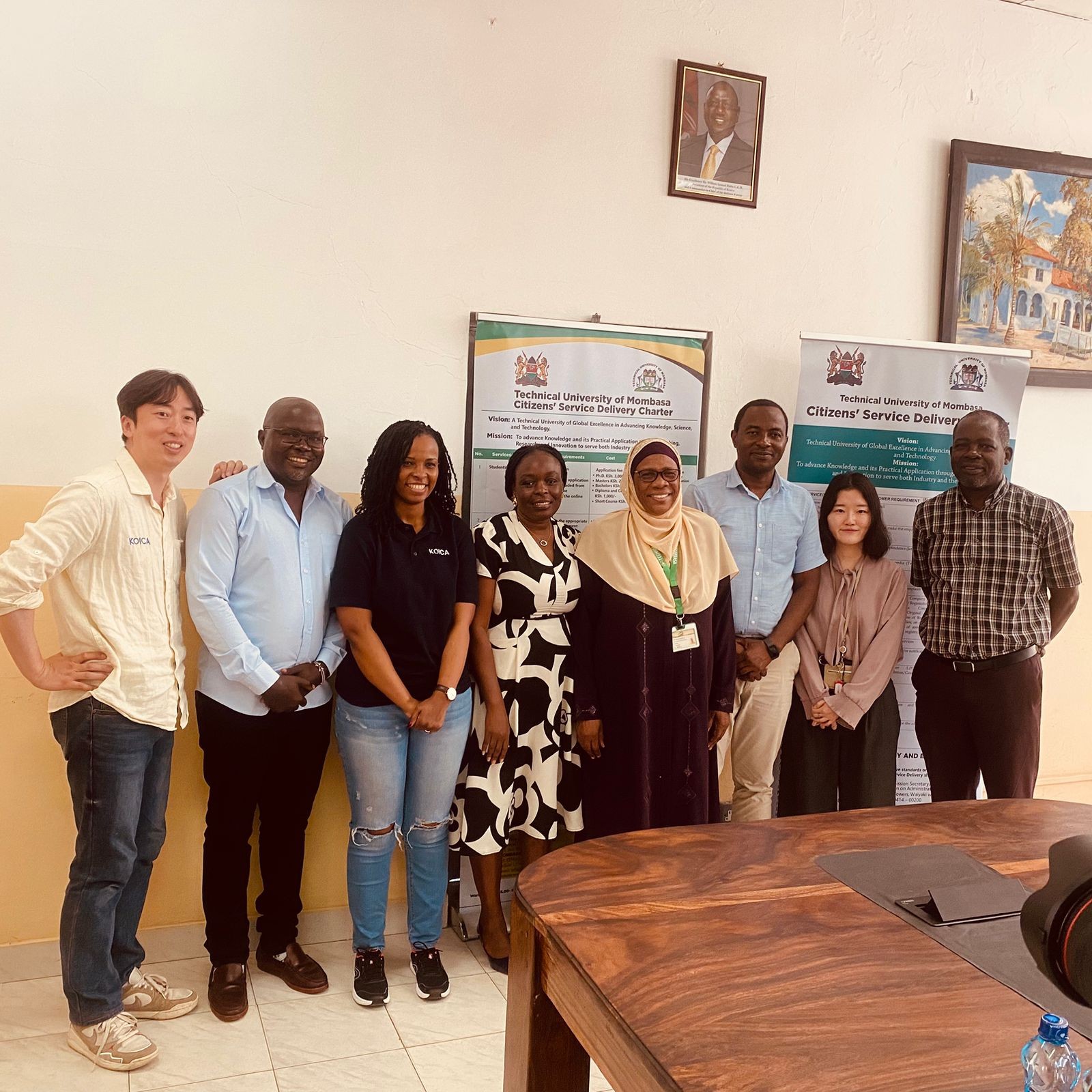
Technical University of Mombasa (TUM) hosted a high-level delegation from the Korea International Cooperation Agency (KOICA), led by Deputy Director Ms. Himayeong Bae, to strengthen technical training capacity and forge strategic pathways for future industrial development.
Reflecting on the impact of this joint initiative, TUM Vice Chancellor Prof. Laila Abubakar highlighted how the university's technical foundation has provided a strong environment for practical skills transfer. Through targeted interventions, KOICA’s support, implemented alongside GIZ, has directly advanced technical and vocational education (TVET), deepened industry linkages, and driven youth empowerment across the region.
To enhance practical instruction, KOICA provided critical learning tools and infrastructure, including 20 laptops, 20 welding machines, 40 simmer machines, 20 industrial grinders, personal protective equipment, and specialized consumables.
As detailed by TUM’s Director of TVET, Dr. Michael Derrick, the curriculum integrated environmental sustainability directly into technical trades, covering four core disciplines:
- Electrical Wiring
- Instrumentation and Control
- Lathe Machine Operation
- Welding
The instructional framework combined three months of rigorous classroom learning with three months of mandatory industrial attachment, ensuring trainees transitioned smoothly into the workforce.
The program focused heavily on equity and economic inclusion, achieving a 70% female enrolment rate through targeted recruitment. The initiative specifically engaged young women who had dropped out of formal education, as well as single parents and widows, equipping them with market-relevant skills for financial independence.
Beyond student outcomes, the program contributed to leadership development among staff. Program instructor Ms. Bibiye Mahmoud went on to become President of the Institute of Engineering Technology in Kenya (IETK), joining Vice Chancellor Prof. Abubakar as a leading advocate for women in STEM fields.
Data from TUM’s recent TVET tracer study highlights the practical success of the initiative:
59% of graduates gained direct employment in industry, with 6% hired before completing their attachments.
18% established their own micro-enterprises.
Graduates like 21-year-old Maxwell Kiptarus demonstrate the real-world value of the training. Following a three-month placement at ABSON Motors, Maxwell was hired with the company pointing to his technical precision and professional discipline as key factors in their decision.
Alongside vocational training, TUM continues to expand its broader sustainability agenda. The university plants 6,000 trees annually across its main and Kwale campuses and incorporates green technology into its infrastructure through solar panels, alternative fuel research, and biogas systems.
TUM’s research divisions are actively executing marine carbon dioxide removal projects funded by the MCDR and developing solar dryers for local fish preservation. Additionally, architecture coursework now emphasizes green building practices, focusing on natural lighting and integrated vegetation design.
Looking ahead, TUM and KOICA outlined strategic priorities to support Kenya's evolving manufacturing sector. Central to this vision is the establishment of a state-of-the-art Fine Instrument Centre at TUM.
Designed to accelerate advanced manufacturing and industrial standardization, the planned centre will feature:
Precision Measurement and Calibration Laboratory: Providing specialized technical testing and high-accuracy equipment calibration for regional industries.
Mould Field Division: Serving as a practical training hub for mass-production design, toolmaking, and industrial prototyping.
By bridging direct community impact with advanced technical infrastructure, TUM and KOICA continue to lay the groundwork for sustainable industrial growth and high-value workforce development.